 farabi
Research · 2017–2024
Clinical Research & Innovation
An AI-enabled clinical-research programme connecting Imperial medical students with real-world technology, startup and MedTech research experiences.
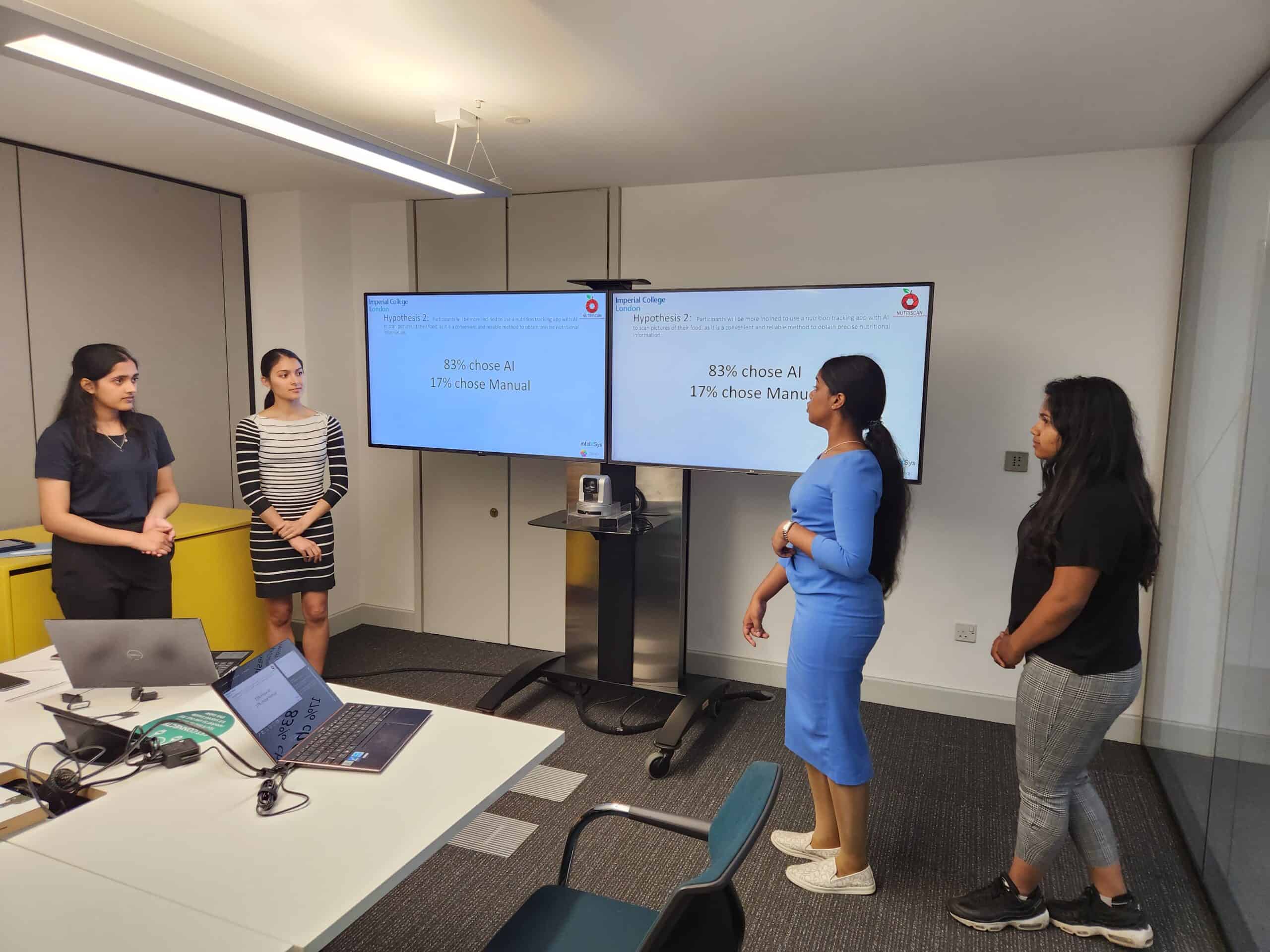
Programme archive / 56 photographs
Gallery
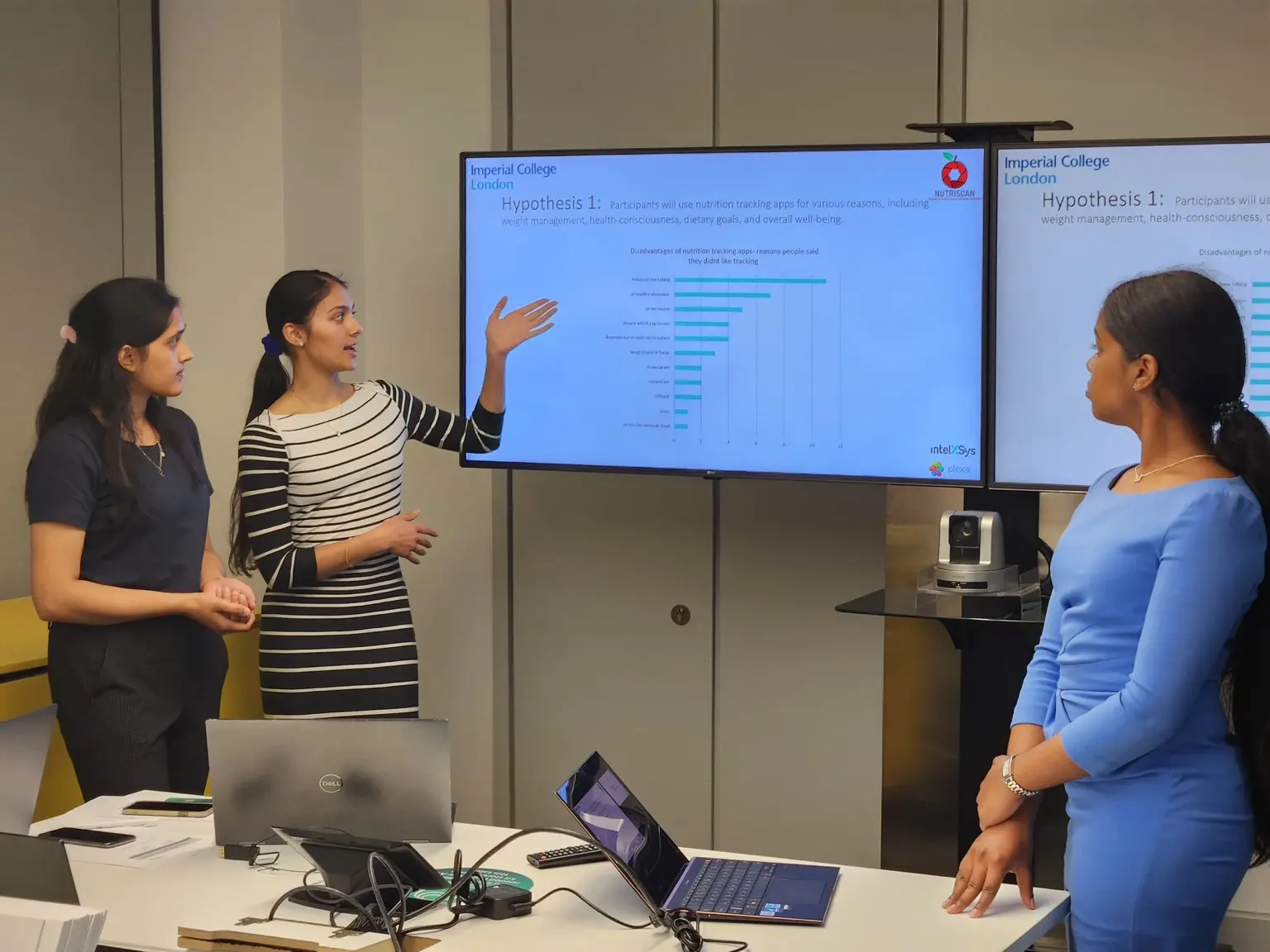
Students presenting their nutrition-tracking research findings
Part two
Project details
Teaching clinical research and innovation
Providing a pivotal link in the scientific pathway underpinning the Medicine course, the module lays the groundwork for students later in the fourth year, when they undertake a full science year and earn a BSc degree before completing the MBBS.
Designed to help students develop data-collection, analysis and presentation skills early in their medical degree, the module gives them further opportunities to apply those skills throughout the rest of their course. In collaboration with corporate partners, students gain industrial research experience and develop a wide variety of practical skills.
Under the technology basket, the following research experiences were carried out at Imperial College London:
- 2017–18 – Active and passive VR, artificial intelligence and neurological response, with ImmVRse
- 2019 – Impact of VR on neurological responses and mental health, with Barclays
- 2020 – Artificial intelligence research for the COVID-19 public-health response
- 2021 – Energy storage and its impact on MedTech in African countries, with Alp Technologies
- 2022 – Artificial intelligence and blockchain in MedTech, with Plexal
- 2023 – Artificial intelligence, particularly OCR and convolutional neural networks, in MedTech, with Plexal
- 2024 – Generative AI in MedTech, with Plexal
Leadership in a three-week research sprint
Farabi led teams of top-performing students, ensuring that their projects could be initiated and completed within a defined timeframe. The students demonstrated outstanding organisational skills, conducting secondary research, collecting data and developing reports in just under three weeks.
Team members used systems analysis and user-experience methods to recommend high-level technical approaches for their backend architecture. They gathered intelligence on future technologies, investigated how those technologies affected end users and described high-level tools as potential solutions.
Dr Sohag Saleh, founder of the module, said: “The module is a great opportunity for students to get out of the lecture hall and experience both science and medicine in new and unfamiliar settings. It teaches science and research at its core, but in the much broader context of the importance of research in meeting the healthcare needs of society, and how the students can play a role in that in the future.”
Watch the programme
Clinical Research & Innovation at Imperial College London
A film from inside the CRI programme, following the students, research setting and collaborative work behind the Imperial College London experience.
Relationship context
The people and
places around it.
The documented organisations and programme environments that helped bring the research into real-world settings.
Imperial College London
Clinical Research and Innovation programme context and delivery environment.

Barclays
2019 project context: VR, neurological response and mental health.

Barclays Eagle Labs
Innovation environment for the 2019 VR, neurological-response and mental-health research project.
Technology startup
2017–18 project context: active and passive VR, artificial intelligence and neurological response.

Alp Technologies
2021 project context: AI-enabled energy storage and MedTech in African countries.

Plexal
2022–24 project context: AI, blockchain, computer vision and generative AI in MedTech.
GSK / Glaxo
Named in the programme archive as part of the wider life-sciences and innovation landscape.