 farabi
Research · 2020
AI-Powered CO-App Digital Health Solution
An AI-powered, blockchain-based platform for consent-led COVID-19 data sharing, symptom reporting and health-service coordination.
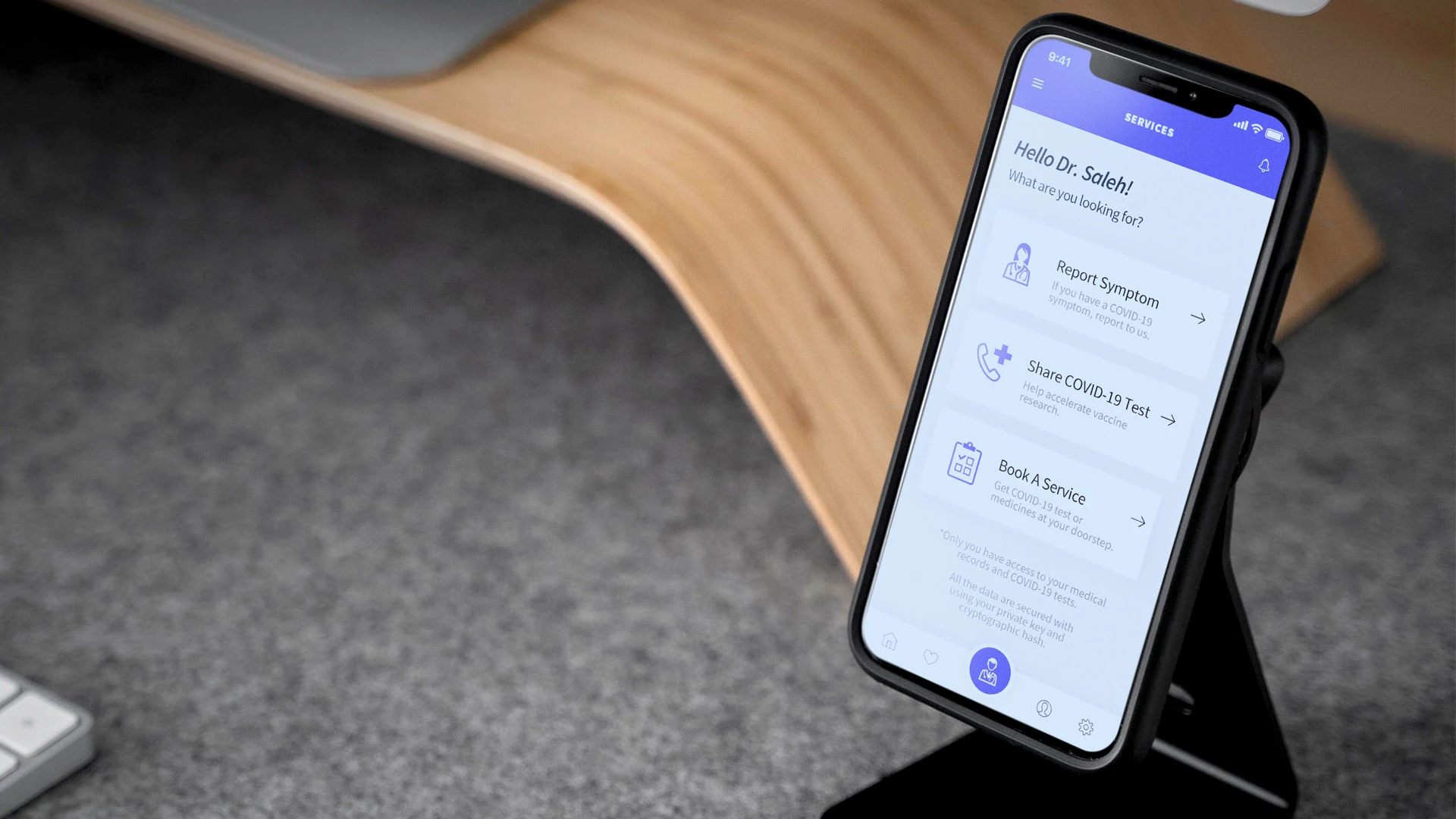
Interactive system architecture / CO-App DHS
How consent, AI
and evidence connect.
What it means / Clinical safety + AI support
Clinical safety + AI support
Safety rules run first. The model can support the next step, but it never diagnoses or automatically enforces an outcome.
Architecture visualisation based on the CO-App DHS system design. It does not process health data, assess an individual or provide a diagnosis.
An AI-powered rapid-response platform for COVID-19 containment
Developed during the first months of the pandemic, AI-powered CO-App DHS explored how computational intelligence and a private-permissioned Ethereum application could connect the public, clinicians, researchers and health-service providers while keeping people in control of access to their information.
The proposed mobile experience combined symptom reporting, contact tracing, test sharing, service booking and access to scientifically grounded public information. Clinical records and images were designed to remain off-chain, while permission events and transaction evidence could be recorded through the blockchain.
Research, prototyping and computational intelligence
Farabi and Dr Sohag Saleh co-developed the platform design and protocol. The peer-reviewed paper records that both authors contributed equally; Saleh was affiliated with the Faculty of Medicine at Imperial College London, while IntelXSys Research partially funded the user-experience design.
The technical concept used clustering and a deep neural network to explore classification of reported symptoms and health factors. The paper also addressed user consent, auditability, GDPR, NHS integration, scalability and secure pathways towards national-scale implementation.
Published and highlighted internationally
Frontiers in Blockchain published the open-access paper on 27 November 2020 as Volume 3, Article 553257. The research was included and highlighted in the World Health Organization’s COVID-19 Research Database, extending its visibility within the global COVID-19 research community.
AI architecture / interactive model
From health signals
to a classified result.
This interactive reconstruction uses the original neural-network diagram that formed the AI architecture for CO-App DHS. Move across the model or select an input to follow an illustrative signal through both hidden layers to the result node.
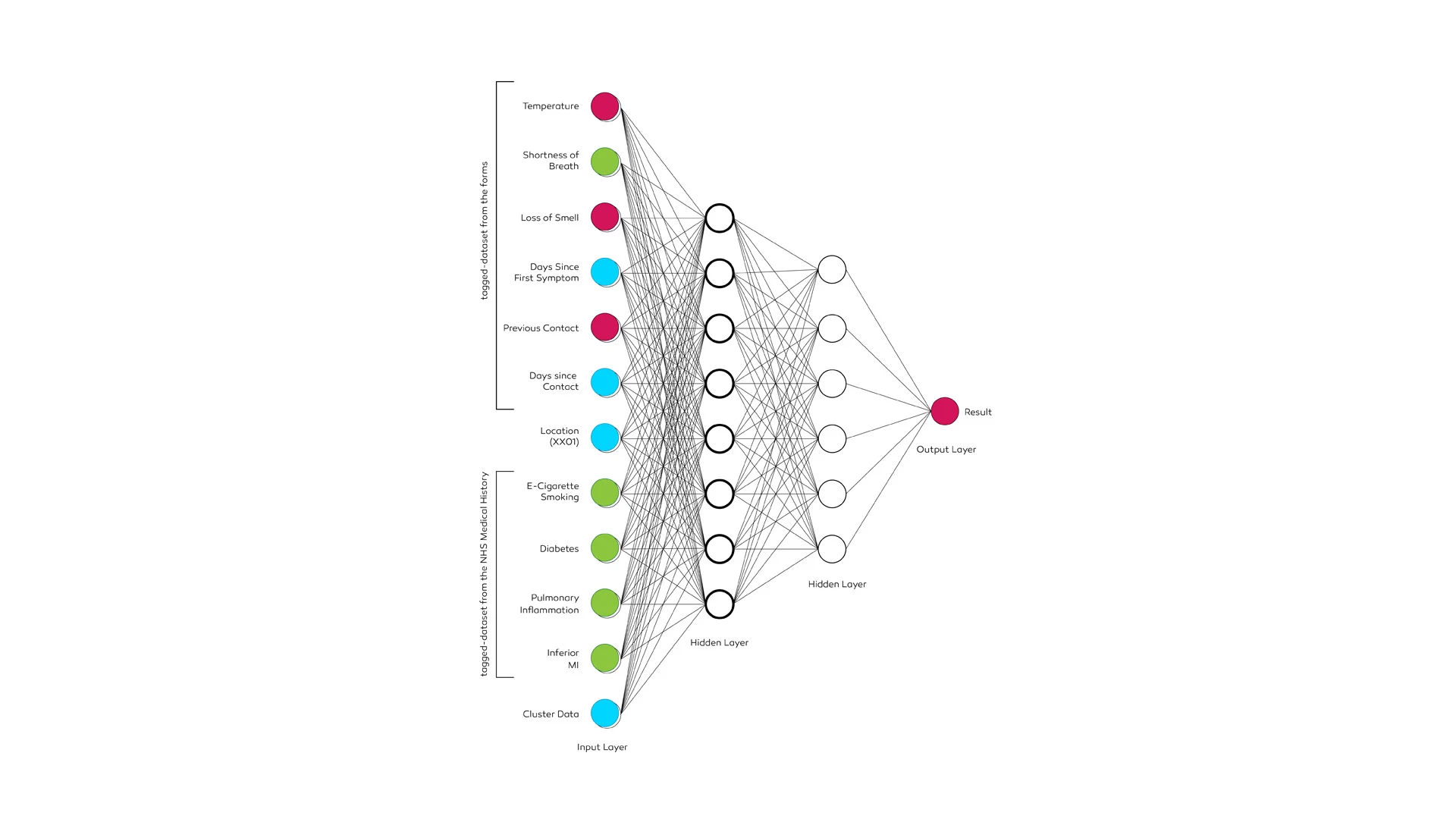
Architecture visualisation only. It does not process personal health data, calculate clinical risk or provide a diagnosis.
Design archive
From protocol
to prototype.
Four visuals from the AI-powered CO-App DHS research and product-design process documented in the Frontiers paper.
Use the arrows, swipe, or choose a frame.
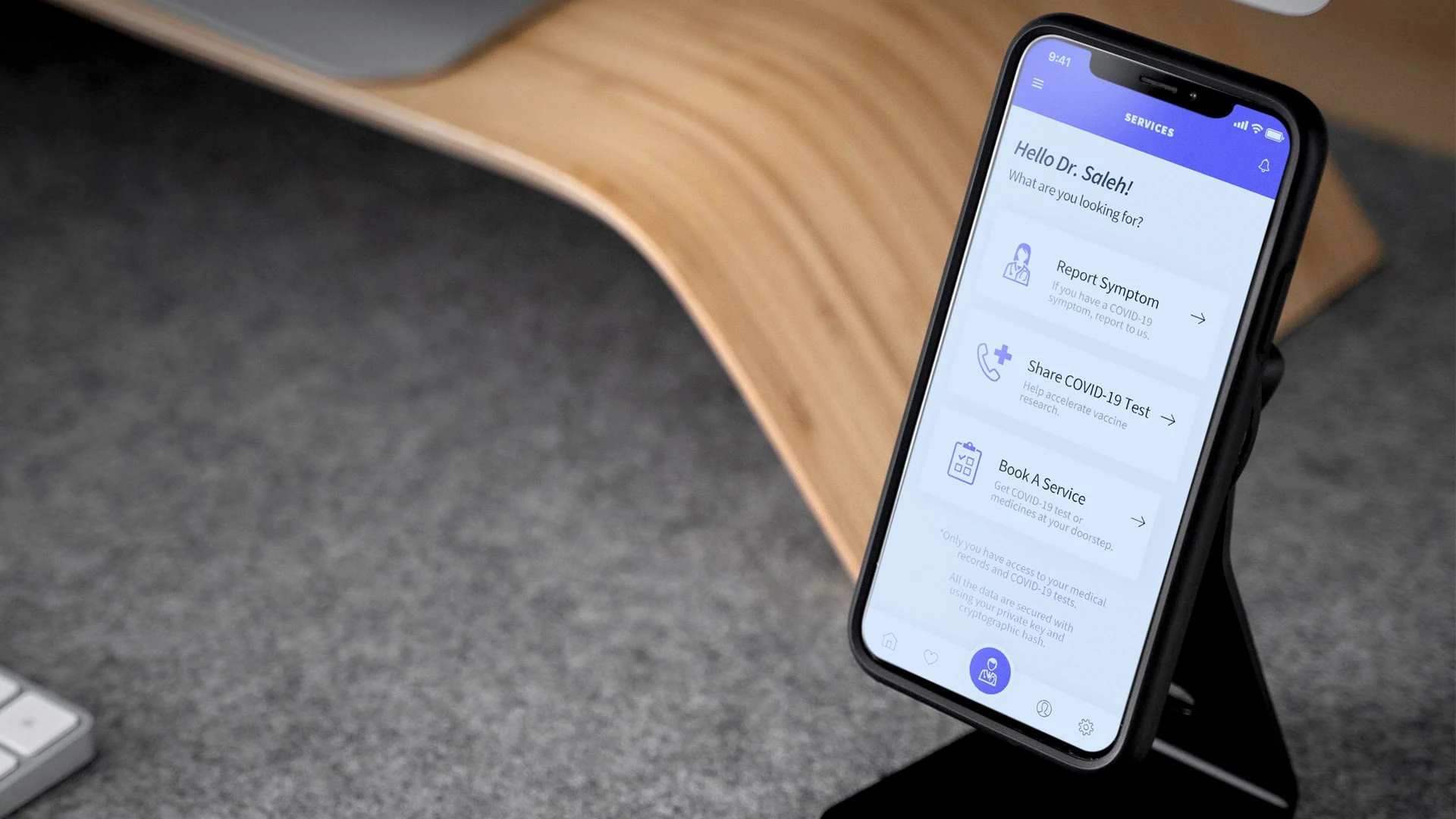
Product conceptAI-powered public services for reporting symptoms, sharing test data and requesting support
Image 1 of 4: AI-powered public services for reporting symptoms, sharing test data and requesting support
Relationship context
The people and
places around it.
The documented organisations and programme environments that helped bring the research into real-world settings.

Imperial College London
Co-author context: Dr Sohag Saleh was affiliated with the Faculty of Medicine, Imperial College London.
Frontiers in Blockchain
Peer-reviewed publication venue for the open-access research paper.
WHO COVID-19 Research Database
The paper was included and highlighted in the WHO-maintained global research database.